Walls that hold back soil
Grade changes and erosion control without long cure times, so the land behind stays usable.
Walls · Bays · Barriers
Large concrete blocks that stack and lock without mortar. Crews use them for walls, material bins and site barriers, in sizes from about 1,000 lb to 4,000 lb.
What you are buying
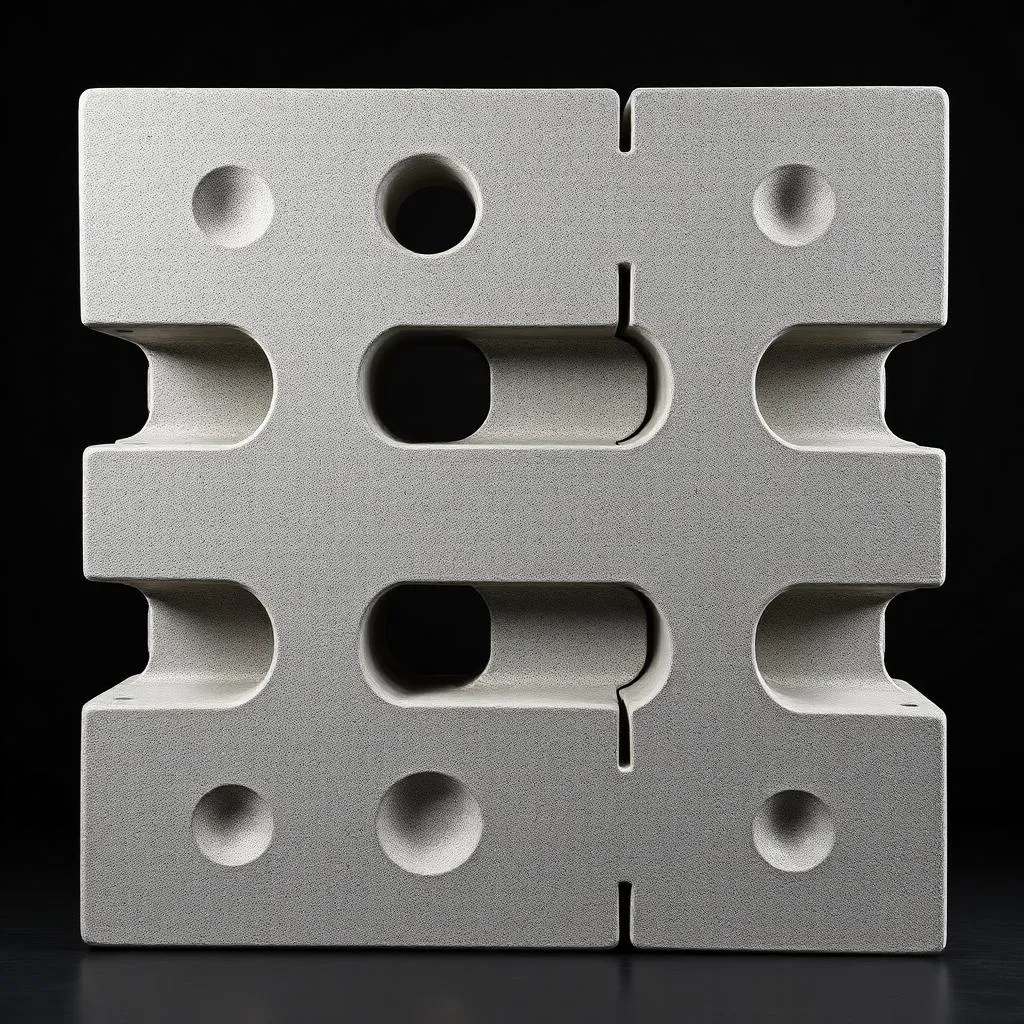
Many crews call them mafia blocks or bin blocks. Each one is precast in a controlled setting and cured before it ships, so it can be set the day it arrives.
There is no cutting, no mortar and no waiting for concrete to cure on site. A machine sets each block, and the next one locks on top.
Each block seats into the one below, and its own weight holds it there.
Freestanding walls hold back soil on a compacted base, which saves time and cost.
Nothing is mortared, so blocks come out and go back in when the plan changes.
Bigger blocks cover more wall per lift but need heavier equipment. Match the block to the wall height and to the machine on site.
| Size (H x W x L) | Approx. weight | Best for |
|---|---|---|
| 2′ x 2′ x 3′ | 1,000+ lb | Short walls, tight spaces, flexible layouts |
| 2′ x 2′ x 4′ | about 2,000–2,800 lb | Commercial bays and standard walls |
| 2′ x 2′ x 6′ | about 3,500–4,000 lb | Industrial storage and high-load walls |
The heavier the unit, the better it resists sliding and overturning.
Small blocks suit tight sites; the 6-foot block goes up fastest on tall walls.
Plain structural, or Rock Face, Brick and Stacked Stone faces for walls in public view.
People buy these blocks because something on site has to stay where it is.
Grade changes and erosion control without long cure times, so the land behind stays usable.
Bays for gravel, sand, salt or recycling that can be rearranged as stock changes.
Silage bunkers, grain separation and equipment yards that take heavy daily use.
Lane separation and perimeters. A multi-ton block stays where you put it.
Multi-ton blocks need truck access and a clear drop zone. We check both and set the delivery window before the truck leaves, and we help plan where to stage blocks so they are moved once.
Lead times depend on order size, the production schedule and distance. You get dates up front so you can book crews.
Walls that hold back soil, storage bins for bulk materials, traffic and security barriers, and structures on farms and industrial yards. Anywhere you need heavy, stable mass that stacks.
They can be. Once stacked and backfilled they are very stable. Because nothing is mortared, they can also be lifted out and reused if the site changes.
Our large blocks run from about 1,000 lb for a 2′ x 2′ x 3′ unit to about 3,500–4,000 lb for a 2′ x 2′ x 6′ unit. Exact weight depends on the mix and is confirmed on your quote.
No. The interlock and the weight of each block hold the wall together without mortar or adhesive.
Decades in most conditions. They are made to handle weather, soil pressure and freeze-thaw cycles with very little wear.
It depends on wall height, the load behind the wall and site conditions. Short walls can use smaller blocks; tall or heavily loaded walls need the larger units. An engineer should size any structural wall.
Yes. We deliver across the United States and plan each shipment around the order size, the site and your schedule.
Bins · Perimeters
Three standard sizes for material bins, site perimeters and gravity walls.
About 8–30 blocks per load
Heavy civil · Flood control
A V-shaped interlock for gravity walls, aggregate bays and flood barriers.
2′ x 2′ x 6′ standard unit
Full · Half · Low-profile
Dry-stacked units up to 4,800 lb that replace mortared masonry on large builds.
2,500–4,000 PSI
Tell us the block size, how many you need and where they are going. We will send back a price and a delivery plan.